Time: 00:00
Correct answers 0 of 0 – 0%
Q1. Which of the following documents have to be on board for an international flight?
a. Certificate of aircraft registration
b. Certificate of airworthiness
c. Airworthiness review certificate
d. EASA Form-1
e. Airplane logbook
f. Appropriate papers for every crew member
g. Technical logbook
A. b, c, d, e, f, g
B. a, b, c, e, f
C. a, b, e, g
D. d, f, g
Q2. Which area could be crossed with certain restrictions?
A. No-fly zone
B. Restricted area
C. Prohibited area
D. Dangerous area
Q3. Where can the type of restriction for a restricted airspace be found?
A. NOTAM
B. AIC
C. ICAO chart 1:500000
D. AIP
Q4. What is the status of the rules and procedures created by the EASA? (e.g. Part-SFCL, Part-MED)
A. They have the same status as ICAO Annexes
B. Only after a ratification by individual EU member states they are legally binding
C. They are not legally binding, they only serve as a guide
D. They are part of the EU regulation and legally binding to all EU member states
Q5. Which validity does the "Certificate of Airworthiness" have?
A. 6 months
B. 12 years
C. Unlimited
D. 12 months
Q6. What is the meaning of the abbreviation "ARC"?
A. Airworthiness Recurring Control
B. Airspace Rulemaking Committee
C. Airspace Restriction Criteria
D. Airworthiness Review Certificate
Q7. The "Certificate of Airworthiness" is issued by the state...
A. in which the aircraft is registered
B. of the residence of the owner
C. in which the aircraft is constructed
D. in which the airworthiness review is done
Q8. A pilot license issued in accordance with ICAO Annex 1 is valid in...
A. those countries that have accepted this license on application
B. the country where the license was issued
C. all ICAO countries
D. the country where the license was acquired
Q9. What is the subject of ICAO Annex 1?
A. Air traffic services
B. Flight crew licensing
C. Rules of the air
D. Operation of aircraft
Q10. What is the period of validity of a private pilot license (PPL)?
A. Unlimited
B. 24 months
C. 48 months
D. 60 months
Q11. What is the minimum age to obtain a private pilot license?
A. 17 years
B. 21 years
C. 16 years
D. 18 years
Q12. What are the minimum requirements among others to acquire a rating for VFR night flights?
A. At least 10 additional flight hours at night, three of them with a flight instructor with at least 1 hour cross-country flight plus 5 solo take-offs and full-stop landings
B. At least 5 additional flight hours at night, four of them with a flight instructor with at least 1 hour cross-country flight plus 5 solo take-offs and full-stop landings
C. At least 5 additional flight hours at night, three of them with a flight instructor with at least 1 hour cross-country flight plus 5 solo take-offs and full-stop landings
D. At least 5 additional flight hours at night, three of them with a flight instructor with at least 1 hour cross-country flight plus 10 solo take-offs and full-stop landings
Q13. The validity of a medical examination certificate class 2 for a 62 years old pilot is...
A. 60 Months
B. 48 Months
C. 24 Months
D. 12 Months
Q14. In which way is a SEP (land) rating renewed if you do not meet the required flight time?
A. A proficiency check with an examiner
B. According to the flight experience there have to be several training flights under supervision of an ATO
C. The ATO can renew the rating after a training flight with a flight instructor
D. The required flight experience has to be accumulated under supervision of a flight instructor
Q15. The possession of a european PPL(A) entitles the holder to...
A. act as pilot on a commercial flight when there are at most 4 people on board
B. act as pilot in commercial and non-commercial flights with single engine aircraft
C. act as PIC, and only for flights in aircraft with a MTOW of maximum 2000 kg a compensation may be obtained
D. act as PIC on non-commercial flights without compensation as well as to receive compensation as a flight instrucor
Q16. What is the minimum age to start a private pilot training at a flight school?
A. 16 years
B. 17 years
C. 21 years
D. 18 years-
Q17. What is the meaning of the abbreviation "SERA"?
A. Selective Radar Altimeter
B. Standardized European Rules of the Air
C. Specialized Radar Approach
D. Standard European Routes of the Air
Q18. What is the meaning of the abbreviation "TRA"?
A. Temporary Reserved Airspace
B. Temporary Radar Routing Area
C. Transponder Area
D. Terminal Area
Q19. What has to be considered when entering an RMZ?
A. To permanently monitor the radio and if possible to establish radio contact
B. To obtain a clearance from the local aviation authority
C. The transponder has to be switched on Mode C and squawk 7000
D. To obtain a clearance to enter this area
Q20. What condition has to be met during a Special VFR flight?
A. Visual reference to the terrain
B. Speed not above 115 kt IAS
C. At least 500 m ground visibilty
D. A minimum distance to clouds of 2000 m
Q21. What has to be done before entering a TMZ?
A. Switch on the transponder and activate mode A and C or mode S
B. Request a clearance before entering
C. Switch on the transponder, activate mode A, and squawk "IDENT"
D. File a flight plan before the flight
Q22. What is the meaning of an area marked as "TMZ"?
A. Transportation Management Zone
B. Touring Motorglider Zone
C. Traffic Management Zone
D. Transponder Mandatory Zone
Q23. What is the meaning of the abbreviation "IFR"?
A. Instrument Flight Rules
B. Instrument Meteorological Conditions
C. Bad Weather Flight Rules
D. Commercial Flight Rules
Q24. A flight is called a "visual flight", if the...
A. visibility in flight is more than 8 km
B. flight is conducted under visual flight rules
C. visibility in flight is more than 5 km
D. flight is conducted in visual meteorological conditions
Q25. What is the meaning of the abbreviation "VMC"?
A. Instrument flight conditions
B. Variable meteorological conditions
C. Visual meteorological conditions
D. Visual flight rules
Q26. Two engine-driven aircraft are flying on crossing courses at the same altitude. Which one has to divert?
A. The lighter one has to climb
B. Both have to divert to the right
C. The heavier one has to climb
D. Both have to divert to the left
Q27. Two aeroplanes are flying on crossing tracks. Which one has to divert?
A. The aircraft which flies from left to right has the right of priority
B. Both have to divert to the right
C. The aircraft which flies from right to left has the right of priority
D. Both have to divert to the left
Q28. In airspace "D" a Boeing 737 and a Cessna 152 are flying on crossing courses. Which aeroplane has to divert?
A. The Cessna 152, because IFR and commercial flights have priority
B. The air traffic control (ATC) has to decide which one has to divert
C. The aeroplane flying from right to left has priority, the other one has to divert
D. The Boeing 737, because an airliner has greater power reserves
Q29. Which of the following options is NOT a sufficient reason to fly below the required minimum height?
A. Take-off or landing at an aerodrome
B. An approach without landing at an aerodrome
C. Bad weather conditions in the vicinity of an aerodrome
D. The drop of towed objects at an aerodrome
Q30. A single-engine piston and a turboprop aeroplane are approaching each other opposite at the same altitude.
Which aeroplane has to change its track to avoid a collision?
Which aeroplane has to change its track to avoid a collision?
A. The turboprop aircraft has to give way to the single-engine piston aircraft
B. Both aircraft have to alter their tracks to the left
C. Both aircraft have to alter their tracks to the right
D. The single-engine piston aircraft has to give way to the turboprop aircraft
Q31. Which distances to clouds have to be maintained during a VFR flight in airpaces C, D and E?
A. 1500 m horizontally, 1000 ft vertically
B. 1500 m horizontally, 1000 m vertically
C. 1000 m horizontally, 1500 ft vertically
D. 1000 m horizontally, 300 m vertically
Q32. The minimum flight visibility at 5000 ft MSL in airspace B for VFR flights is...
A. 8000 m
B. 3000 m
C. 1500 m
D. 5000 m
Q33. What is the minimum flight visibility in airspace "C" for an aircraft operating under VFR at 5000 ft MSL?
A. 8000 m
B. 1500 m
C. 3000 m
D. 5000 m
Q34. What is the minimum flight visibility in airspace "E" for an aircraft operating under VFR at FL75?
A. 8000 m
B. 1500 m
C. 3000 m
D. 5000 m
Q35. What is the minimum flight visibility in airspace "C" for an aircraft operating under VFR at FL110?
A. 5000 m
B. 1500 m
C. 3000 m
D. 8000 m
Q36. What is the minimum flight visibility in airspace "C" for an aircraft operating under VFR at FL125?
A. 5000 m
B. 3000 m
C. 1500 m
D. 8000 m
Q37. What are the minimum distances to clouds for a VFR flight in airspace "B"?
A. Horizontally 1.500 m, vertically 1.000 m
B. Horizontally 1.500 m, vertically 300 m
C. Horizontally 1.000 m, vertically 1.500 ft
D. Horizontally 1.000 m, vertically 300 m
Q38. What is the minimum flight visibility in airspace "C" below FL 100 for an aircraft operating under VFR?
A. 5 km
B. 10 km
C. 1.5 km
D. 8 km
Q39. What is the minimum flight visibility in airspace "C" at and above FL 100 for an aircraft operating under VFR?
A. 1.5 km
B. 5 km
C. 10 km
D. 8 km
Q40. The term "ceiling" is defined as the...
A. altitude of the base of the lowest layer of clouds covering more than half of the sky below 20000 ft
B. height of the base of the lowest layer of clouds covering more than half of the sky below 10000 ft
C. height of the base of the highest layer of clouds covering more than half of the sky below 20000 ft
D. height of the base of the lowest layer of clouds covering more than half of the sky below 20000 ft
Q41. Being intercepted by a military aircraft at daytime, what is the meaning of the following signal: Alternating movement of the ailerons, normally left of the intercepted aircraft, followed by a smooth turn to the left?
A. Prepare for a safety landing, you have entered a prohibited area
B. You are entering a restricted area, leave the airspace immediately
C. Follow me
D. You are clear of any restricted or reserved airspaces, you can continue on your heading
Q42. Being intercepted by a military aircraft at daytime, what is the meaning of the following signal: A sudden heading change of 90 degrees or more and a pull-up of the aircraft without crossing the track of the intercepted aircraft?
A. You are entering a restricted area, leave the airspace immediately
B. You may continue your flight
C. Follow me, i will bring you to the next suitable airfield
D. Prepare for a safety landing, you have entered a prohibited area
Q43. The altimeter is switched from local QNH to 1013.25 hPa...
A. at the decision height
B. at 4000 ft
C. when climbing above the transition altitude
D. when descending below FL 100
Q44. During a flight at FL 80, the altimeter setting has to be...
A. 1030.25 hPa
B. 1013.25 hPa
C. local QFE
D. local QNH
Q45. What is the purpose of the semi-circular rule?
A. To avoid collisions by reducing the probability of opposing traffic at the same altitude
B. To fly without a filed flight plan in prescribed zones published in the AIP
C. To allow safe climbing or descending in a holding pattern
D. To avoid collisions by suspending turning manoeuvres
Q46. Which of the following options are possible SSR-Transponder modes?
A. A, C, S
B. A, C, R
C. B, C, V
D. B, R, S
Q47. A transponder with the ability to send the current pressure level is a...
A. pressure-decoder
B. mode C or S transponder
C. mode A transponder
D. transponder approved for airspace "B"
Q48. Which transponder code indicates a loss of radio communication?
A. 2000
B. 7700
C. 7000
D. 7600
Q49. Which transponder code should be set during a radio failure without any request?
A. 7600
B. 7700
C. 7000
D. 7500
Q50. Which transponder code has to be set unrequested during an emergency?
A. 7600
B. 7000
C. 7700
D. 7500
Q51. Which air traffic service is responsible for the safe conduct of flights?
A. ALR (alerting service)
B. FIS (flight information service)
C. ATC (air traffic control)
D. AIS (aeronautical information service)
Q52. Air traffic control service is conducted by which services?
A. TWR (aerodrome control service) APP (approach control service) ACC (area control service)
B. APP (approach control service) ACC (area control service) FIS (flight information service)
C. ALR (alerting service) SAR (search and rescue service) TWR (aerodrome control service)
D. FIS (flight information service) AIS (aeronautical information service) AFS (aeronautical fixed telecommunication service)
Q53. Which answer is correct with regard to separation in airspace "E"?
A. IFR traffic is separated only from VFR traffic
B. VFR traffic is separated from VFR and IFR traffic
C. VFR traffic is separated only from IFR traffic
D. VFR traffic is not separated from any other traffic
Q54. Which air traffic services can be expected within an FIR (flight information region)?
A. ATC (air traffic control) FIS (flight information service)
B. FIS (flight information service) ALR (alerting service)
C. AIS (aeronautical information service) SAR (search and rescue)
D. ATC (air traffic control) AIS (aeronautical information service)
Q55. A pilot can contact FIS (flight information service)...
A. via telephone
B. via internet
C. by a personal visit
D. via radio communication
Q56. What is the correct phrase with respect to wake turbulence to indicate that a light aircraft is following an aircraft of a higher wake turbulence category?
A. Danger jet blast
B. Be careful wake winds
C. Attention propwash
D. Caution wake turbulence
Q57. Which of the following options states a correct position report?
A. DEABC reaching "N"
B. DEABC over "N" in FL 2500 ft
C. DEABC, "N", 2500 ft
D. DEABC over "N" at 35
Q58. What is the meaning of the abbreviation "AIREP"?
A. Aircraft report
B. Aeronautical instrument requirement report
C. Automatic identification report
D. Aeronautical information report
Q59. What information is provided in the general part (GEN) of the AIP?
A. Table of content, classification of airfields with corresponding maps, approach charts, taxi charts, restricted and dangerous airspaces
B. Map icons, list of radio nav aids, time for sunrise and sunset, airport fees, air traffic control fees
C. Warnings for aviation, ATS airspaces and routes, restricted and dangerous airspaces
D. Access restrictions for airfields, passenger controls, requirements for pilots, license samples and validity periods
Q60. Which are the different parts of the Aeronautical Information Publication (AIP)?
A. GEN MET RAC
B. GEN COM MET
C. GEN AGA COM
D. GEN ENR AD
Q61. What information is provided in the part "AD" of the AIP?
A. Warnings for aviation, ATS airspaces and routes, restricted and dangerous airspaces
B. Table of content, classification of airfields with corresponding maps, approach charts, taxi charts
C. Map icons, list of radio nav aids, time for sunrise and sunset, airport fees, air traffic control fees
D. Access restrictions for airfields, passenger controls, requirements for pilots, license samples and validity periods
Q62. The shown NOTAM is valid until...
A1024/13 A) LOWW B) 1305211200 C) 1305211400 E) STOCKERAU VOR STO 113.00 UNSERVICEABLE.
A1024/13 A) LOWW B) 1305211200 C) 1305211400 E) STOCKERAU VOR STO 113.00 UNSERVICEABLE.
A. 21/05/2013 14:00 UTC
B. 13/10/2013 00:00 UTC
C. 13/05/2013 12:00 UTC
D. 21/05/2014 13:00 UTC
Q63. A Pre-Flight Information Bulletin (PIB) is a presentation of current...
A. ICAO information of operational significance prepared after the flight
B. AIP information of operational significance prepared prior to flight
C. AIC information of operational significance prepared after the flight
D. NOTAM information of operational significance prepared prior to flight
Q64. The term "aerodrome elevation" is defined as...
A. the highest point of the landing area
B. the lowest point of the landing area
C. the highest point of the apron
D. the average value of the height of the manoeuvring area
Q65. The term "runway" is defined as a...
A. round area on an aerodrome prepared for the landing and take-off of aircraft
B. rectangular area on a land aerodrome prepared for the landing and take-off of aircraft
C. rectangular area on a land or water aerodrome prepared for the landing and take-off of aircraft
D. rectangular area on a land aerodrome prepared for the landing and take-off of helicopters
Q66. Which statement is correct with regard to the term "taxi holding point"?
A. A taxi holding point is an area where the aircraft must stop unless further permission to proceed is given
B. A taxi holding point is only to be observed for IFR traffic if instrument weather conditions are prevailing
C. A taxi holding point is the point at which the aircraft must stop unless further permission to proceed is given
D. A taxi holding point is designed to indicate the beginning of the safety area and may be crossed when a taxi clearance is given
Q67. What does the reported runway condition "WET" mean?
A. Some water patches are visible
B. The surface of the runway is soaked, but there are no significant patches of standing water
C. A large part of the surface is flooded
D. The runway is clear of water, ice, and snow
Q68. What does the reported runway condition "DAMP" mean?
A. Wet surface, but no significant puddles are visible
B. Change of colour on the surface due to moisture
C. The runway is clear of water, ice, and snow
D. A large part of the surface is flooded
Q69. What does "WATER PATCHES" mean regarding the reported runway condition?
A. A large part of the surface is flooded
B. Patches of standing water are visible
C. Wet surface, but no significant patches are visible
D. The runway is clear of water, ice, and snow
Q70. How can a wind direction indicator be marked for better visibility?
A. The wind direction indicator may be mounted on top of the control tower
B. The wind direction indicator could be made from green materials
C. The wind direction indicator could be surrounded by a white circle
D. The wind direction indicator could be located on a big black surface
Q71. What is the meaning of a flashing red light signal at a controlled aerodrome directed to an aircraft in flight?
A. Airport unsafe, do not land
B. Return for landing, followed by steady green at the appropriate time
C. Cleared to land
D. Give way to other aircraft and continue circling
Q72. What is the meaning of a flashing green light signal at a controlled aerodrome directed to an aircraft in flight?
A. Return for landing, followed by steady green at the appropriate time
B. Cleared to land
C. Give way to other aircraft and continue circling
D. Airport unsafe, do not land
Q73. What is the meaning of a steady green light signal at a controlled aerodrome directed to an aircraft in flight?
A. Give way to other aircraft and continue circling
B. Cleared to land
C. Return for landing, followed by steady green at the appropriate time
D. Airport unsafe, do not land
Q74. What is the meaning of a flashing white light signal at a controlled aerodrome directed to an aircraft on ground?
A. Cleared to taxi
B. Clear the taxiway / runway
C. Cleared for take-off
D. Return to starting point
Q75. What is the meaning of a flashing red light signal at a controlled aerodrome directed to an aircraft on ground?
A. Cleared for take-off
B. Cleared to taxi
C. Immediately taxi clear of runway in use
D. Return to starting point
Q76. What is the meaning of a flashing green light signal at a controlled aerodrome directed to an aircraft on ground?
A. Cleared to taxi
B. Return to starting point
C. Land at this airport and proceed to the apron
D. Cleared for take-off
Q77. Of what shape is a landing direction indicator?
A. L
B. A straight arrow
C. An angled arrow
D. T
Q78. What is the purpose of the signal square at an aerodrome?
A. It contains special symbols to indicate the conditions at the aerodrome visually to over-flying aircraft
B. It is an illuminated area on which search and rescue and fire fighting vehicles are placed
C. Aircraft taxi to this square to get light signals for taxi and take-off clearance
D. It is a specially marked area to pick up or drop towing objects
Q79. In which way should a pilot confirm received light signals in flight?
A. Apply some changes of RPM
B. Apply some changes of the rudder
C. Rock the wings (in the daytime)
D. Apply some fast pitch changes
Q80. What is the meaning of a steady red light signal at a controlled aerodrome directed to an aircraft on ground?
A. Land at this airport and proceed to apron
B. Clear the taxiway / runway
C. Return to starting point
D. Stop
Q81. How are two parallel runways designated?
A. The left runway gets the suffix "L", the right runway "R"
B. The left runway gets the suffix "L", the right runway remains unchanged
C. The left runway gets the suffix "-1", the right runway "-2"
D. The left runway remains unchanged, the right runway designator is increased by 1
Q82. According to ICAO Anex 14, which is the colour marking of a runway?
A. Blue
B. White
C. Yellow
D. Green
Q83. What is indicated by a pattern of longitudinal stripes of uniform dimensions disposed symmetrically about the centerline of a runway?
A. At this point the glide path of an ILS hits the runway
B. Do not touch down before them
C. Do not touch down behind them
D. A ground roll could be started from this position
Q84. Which runway designators are correct for 2 parallel runways?
A. "06L" and "06R"
B. "18" and "18-2"
C. "26" and "26R"
D. "24" and "25"
Q85. What is a "PAPI" (Precision Approach Path Indicator)?
A. A visual aid that provides guidance information to help a tower controller acquire and maintain the correct approach to an aerodrome or an airport
B. A visual aid that provides guidance information to help a pilot acquire and maintain the correct glidepath to an aerodrome or an airport
C. An instrumental aid that provides guidance information to help a pilot acquire and maintain the correct approach to an aerodrome or an airport
D. A visual aid that provides guidance information to help a pilot acquire and maintain the correct departure track when departing from an aerodrome or an airport
Q86. An aerodrome beacon (ABN) is a...
A. rotating beacon installed at an airport or aerodrome to indicate its location to aircraft pilots from the ground
B. rotating beacon installed at the beginning of the final approach to indicate its location to aircraft pilots from the air
C. rotating beacon installed at an airport or aerodrome to indicate its location to aircraft pilots from the air
D. fixed beacon installed at an airport or aerodrome to indicate its location to aircraft pilots from the air
Q87. Which is the colour of runway edge lights?
A. Red
B. White
C. Blue
D. Green
Q88. Which is the colour of runway end lights?
A. Red
B. White
C. Blue
D. Green
Q89. What is shown on the printed sign?

A. Point A on a taxiway
B. Part A of the runway
C. Taxiway A
D. Parking position A
Q90. What is shown on the printed sign?
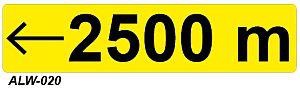
A. 2500 m in the stated direction till reaching the parking area
B. From this intersection the available runway length is 2500 m in the stated direction
C. The complete length of the runway in the stated direction is 2500 m
D. 2500 m in the stated direction till reaching the departure point of the runway
Q91. What is the meaning of this sign at an aerodrome?
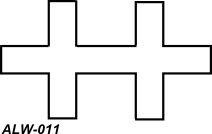
A. Landing prohibited for a longer period
B. Glider flying is in progress
C. Caution, manoeuvring area is poor
D. After take-off and before landing all turns have to be made to the right
Q92. What is the meaning of the illustrated ground signal as shown in the signal area of an aerodrome?
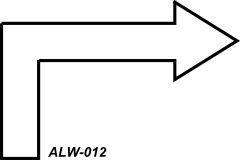
A. Caution, manoeuvring area is poor
B. Prohibition on landing for a longer period
C. After take-off and before landing all turns have to be made to the right
D. Ground movement restricted to hard surfaces
Q93. What is the meaning of "DETRESFA"?
A. Uncertainty phase
B. Rescue phase
C. Distress phase
D. Alerting phase
Q94. Who provides search and rescue service?
A. Only military organisations
B. International approved organisations
C. Only civil organisations
D. Both military and civil organisations
Q95. How can a pilot confirm a search and rescue signal on ground in flight?
A. Rock the wings
B. Push the rudder in both directions multiple times
C. Fly in a parabolic flight path multiple times
D. Deploy and retract the landing flaps multiple times
Q96. With respect to aircraft accident and incident investigation, what are the three categories regarding aircraft occurrences?
A. Event Crash Disaster
B. Happening Event Serious event
C. Incident Serious incident Accident
D. Event Serious event Accident
Q97. What is the primary purpose of an aircraft accident investigation?
A. To Determine the guilty party and draw legal consequences
B. To clarify questions of liability within the meaning of compensation for passengers
C. To identify the reasons and work out safety recommendations
D. To work for the public prosecutor and help to follow-up flight accidents